


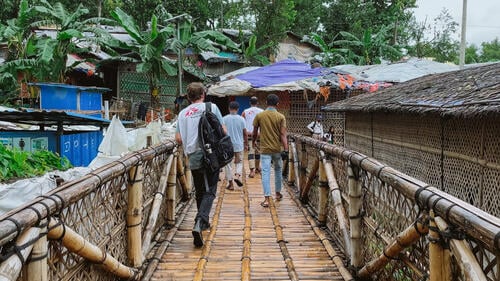
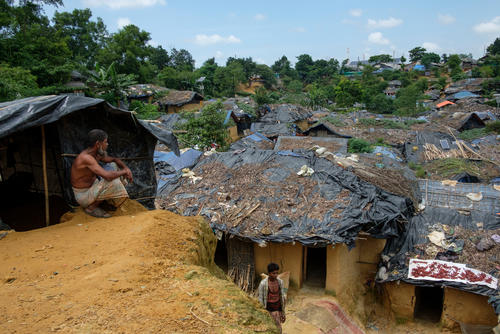
Eight years on from fleeing targeted violence in Myanmar, Rohingya people are still living in dire conditions in the Cox’s Bazar district of Bangladesh.
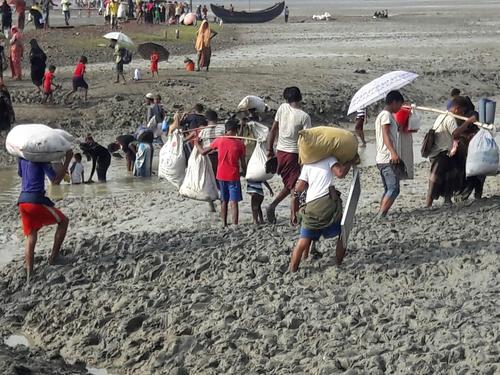
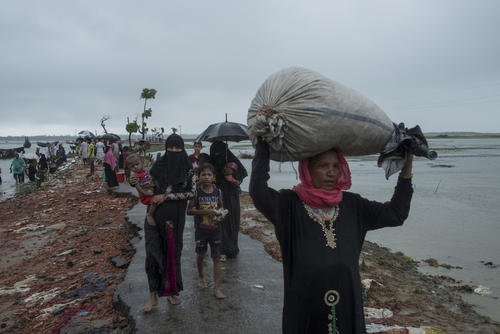
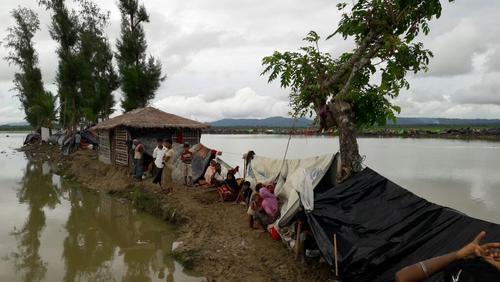
Around 1 million Rohingya refugees are living in Cox’s Bazar, which has hosted refugees from Myanmar since 1978. As violence continues in Rakhine state, Myanmar, people continue to flee across the border to Bangladesh. They arrive to Cox’s Bazar’s over-cramped living spaces and lack of basic services, finding themselves reliant on humanitarian aid for survival.
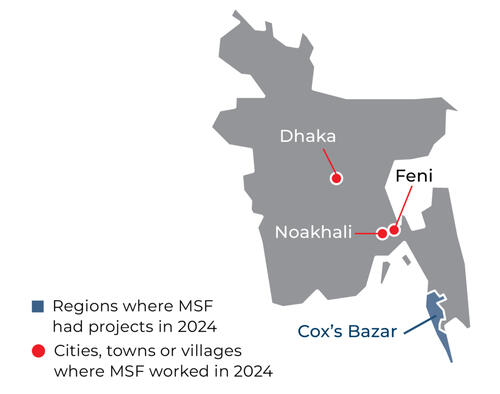
We are on site in Cox’s Bazar, running three 24/7 hospitals and supporting in five other health facilities. Our teams provide free of charge services like family planning, neonatal intensive care, mental health support, and non-communicable disease management. In 2025, we began a “test and treat” campaign for hepatitis C in the camps, with the aim of treating 30,000 people by the end of 2026.
In 2025, we finished our work in Bangladesh’s capital city, Dhaka, where we were running a clinic for local communities in the Kamrangirchar neighbourhood. As a low-lying coastal country, Bangladesh is exposed to severe flooding and monsoons. Our teams are prepared to support national authorities during flooding emergencies.
Our activities in 2024 in Bangladesh
Data and information from the International Activity Report 2024.
1,924
1,924
€28.8 M
28.8M
1985
1985
MSF in Bangladesh in 2024
Following an upsurge in fighting in Myanmar in 2024, Médecins Sans Frontières (MSF) teams witnessed an increase in the number of Rohingya refugees arriving in Bangladesh, many with violence-related injuries.

624,100
624,1
3,930
3,93
3,330
3,33
2,200
2,2
Bangladesh
"Now, no one can abuse me" - Counselling for survivors of sexual and gender-based violence
Voices from the Field
10 Oct 2017
Rohingya refugee crisis
“If this is the better option, the other must have been a living hell”
Voices from the Field
6 Oct 2017
Rohingya refugee crisis
Rapid influx of Rohingya refugees from Myanmar into Bangladesh
Report
1 Oct 2017
Rohingya refugee crisis
Immediate action needed to avert massive public health disaster
Press Release
21 Sep 2017
Rohingya refugee crisis
International humanitarian access to Rakhine State must urgently be permitted
Press Release
18 Sep 2017
Rohingya refugee crisis
Rohingya in Myanmar and Bangladesh urgently require medical and humanitarian assistance
Press Release
6 Sep 2017

Mediterranean migration
Proactive search and rescue operations essential life-saver
Project Update
20 Aug 2015

Bangladesh
MSF providing psycho-social care to victims of arson attacks in Dhaka, Bangladesh
Project Update
5 Feb 2015