


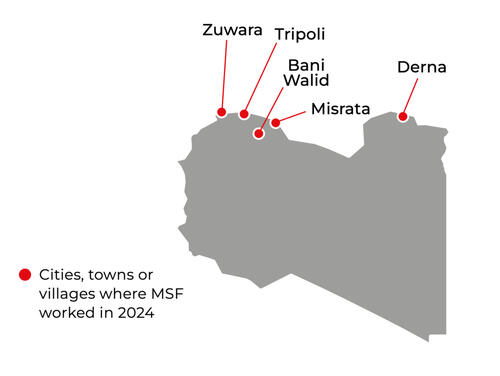
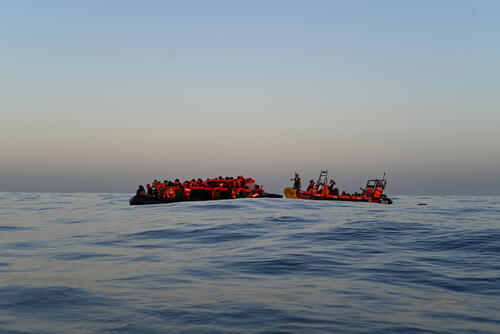
In Zuwara, we provided basic healthcare, sexual and reproductive care, tuberculosis diagnosis and treatment, and mental health support. We also assisted migrants intercepted at sea at disembarkation points. In Misrata, we supported the provision of medical assistance to tuberculosis patients. In Tripoli, we provided protection and emergency medical services to people who needed assistance and ran a mobile clinic in a detention centre once a week.
In March 2025, we were instructed to suspend our activities. The suspension was followed by an order to leave the country in November 2025 from the Libyan Ministry of Foreign Affairs. We have continued to engage with the authorities to resume our activities.
Our activities in 2024 in Libya
Data and information from the International Activity Report 2024.
115
115
€7.9 M
7.9M
2011
2011
MSF in Libya in 2024
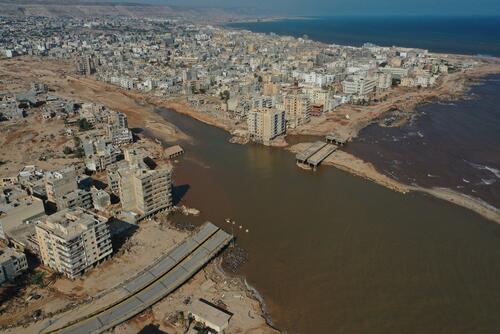
In 2024, Médecins Sans Frontières (MSF) provided essential healthcare and support to migrants, refugees and asylum seekers in Libya, many of whom have been subjected to extreme violence and abuse.

19,800
19,8
4,280
4,28
260
26

Refugees, IDPs and people on the move
EU leaders continue to push through deadly policies for migrants
Project Update
12 May 2023
Libya
MSF calls for evacuation of most vulnerable migrants from Libya to safe countries
Press Release
20 Jun 2022
Refugees, IDPs and people on the move
Italy-Libya agreement: Five years of EU-sponsored abuse in Libya and the central Mediterranean
Project Update
2 Feb 2022
Libya
Thousands beaten up, detained following days of mass arrests in Tripoli
Press Release
6 Oct 2021