


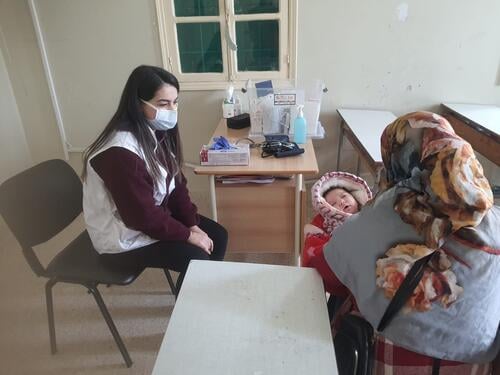
Beirut – Médecins Sans Frontières (MSF) teams across Lebanon have rapidly adapted their activities to respond to the growing humanitarian needs resulting from the escalation of violence and the mass displacement of people due to Israel’s relentless bombing. However, addressing such immense needs will require a comprehensive response.
“Our teams are responding, but needs are immense,” says Jeremy Ristord, MSF’s head of programmes in Lebanon. “Tens of thousands of people are in urgent need of protection, water, basic relief items, and access to healthcare now. A swift mobilisation of emergency and flexible funding must happen immediately to scale up responding to needs at a nationwide level.”
According to Lebanese authorities, more than 217 people have been killed since 2 March, and close to 800 have been injured as a result of Israel’s relentless bombing. Thousands of families have been displaced as sweeping evacuation orders covering large parts of southern Lebanon, southern Beirut and areas of the Bekaa Valley, force people to flee with nowhere safe to go, raising serious concerns about potential violations of international humanitarian law.
“This escalation comes after 15 months of a ceasefire that never brought an end to Israeli attacks,” says Ristord. “Now families are being pushed into impossible choices: flee once again or remain at home under threat. In this environment of relentless bombing of densely populated areas, we call for the protection of civilians, healthcare workers and medical facilities.”
Since 2 March, MSF teams have been assessing needs and responding in several collective shelters, towns and cities across Lebanon where tens of thousands of displaced people have gathered. Many people have already been displaced multiple times during previous escalations. Shelters are overcrowded, with some people sleeping in their cars or on the streets. Others have remained in their homes despite evacuation orders, or returned due to a lack of space in shelters or lack of means to rent accommodation.
Across Lebanon, MSF has set up several mobile clinics to reach displaced people. A newly established mobile clinic in Saida, Lebanon’s third biggest city in the south, provided more than 70 consultations in one day, together with consultations for psychological first aid. On 6 March, another mobile clinic was set up in Barja, in the Chouf area of Mount Lebanon – where an estimated 10,000 people are sheltering – and, in just a few hours, delivered 72 general consultations, 11 sexual and reproductive health consultations, and 13 mental health support sessions.
In this environment of relentless bombing of densely populated areas, we call for the protection of civilians, healthcare workers and medical facilities.Jeremy Ristord, MSF head of programmes in Lebanon
MSF set up a third mobile clinic in Bebnine in Akkar in northern Lebanon, treating more than 50 displaced people from the south on the first day of activities. On 7 March we launched additional mobile clinics in Beirut and the Bekaa region to support internally displaced people, alongside preparing mental health helplines to provide psychological support to people who are on the road or unable to reach services.
In Beirut, Bekaa and Chouf, we have already distributed 350,000 litres of water and over seven tonnes of essential relief items, like blankets and hygiene kits, to thousands of displaced people. In Nabatiyeh and South governorates, MSF has had to suspend on-ground activities due to evacuation orders issued by Israel and the lack of security guarantees for staff. However, MSF teams continue to look into avenues of providing support in the area. We continue to run our clinics in Bourj Hammoud in Beirut and in Arsal in Baalbek-Hermel governorate, and to support healthcare centres in Tripoli, to ensure continuity of care for patients.
The scale of the crisis demands urgent and comprehensive action. At a time when the 2026 Lebanon Response Plan is only 14 percent funded and contingency stocks remain critically low, MSF calls for the immediate mobilisation of emergency and flexible funding to rapidly scale up assistance for displaced people and the communities hosting them.
MSF remains in contact with Lebanese authorities and other organisations and is ready to increase our support as needs grow.
Lebanon
Lebanon: Humanitarian scale-up urgently needed after almost two months of devastation
Statement
17 Apr 2026
Lebanon
Bringing clean water and sanitation services to forcibly displaced families in Lebanon
Voices from the Field
16 Apr 2026
Lebanon
Lebanon: Testimony from a night of mass casualties in Beirut
Voices from the Field
9 Apr 2026