


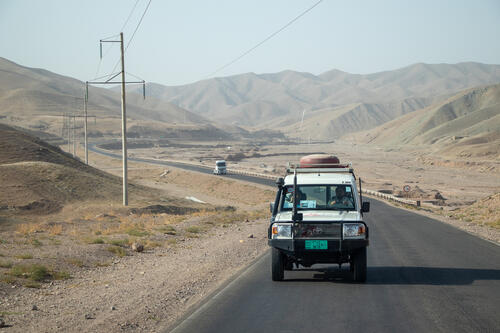
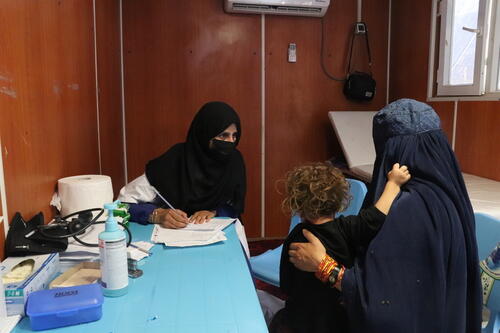
Herat - Since 5 November, local restrictions have been implemented in Herat province, Afghanistan, requiring female patients, caretakers, and staff to wear a burqa to enter public health facilities, including at Herat regional hospital. This sudden enforcement adds limitations to women’s participation in everyday life and places additional barriers on their ability to access essential healthcare. Between 5 and 7 November, under this new enforcement, Médecins Sans Frontières (MSF), which supports paediatric services inside Herat regional hospital, already observed a 28 per cent drop in admissions.
“These restrictions further impede women’s lives and limit their access to healthcare,” says Sarah Chateau, MSF programme manager. “Female patients and caretakers are now barred from entering the hospital unless they wear a burqa, meaning that access to care is determined by clothing rather than medical need.”
Female patients and caretakers are now barred from entering the hospital unless they wear a burqa, meaning that access to care is determined by clothing rather than medical need.Sarah Chateau, MSF programme manager
“Each restriction placed on women as patients translates into delayed or denied medical care,” adds Chateau. “We know that this will have severe consequences for children and mothers who already face enormous barriers to accessing health services in Afghanistan.”
At the Islam Qala border crossing with Iran, humanitarian organisations are witnessing similar challenges while bringing care to returnees who have been expelled from Iran. Out of more than one hundred female staff who previously worked there, only three - a midwife, a doctor, and a nurse - are currently permitted to work, under strict conditions requiring them to wear a burqa at all times.
Many of the women expelled from Iran arrive with fragile health, only to face limited access to hygiene services and medical care. Some are also the head of their household. Having female staff to work with them at the border is vital.
“The combined effect of these restrictions in Herat and at the border is alarming,” says Chateau.
Since 2021, women in Afghanistan have been increasingly erased from public life. Women are barred from accessing secondary and higher education, and from working in many public and humanitarian roles. They also have limited access to healthcare, and are excluded from public spaces.
Afghanistan
Winter risks bringing further hardship to people affected by Kunar earthquake
Project Update
18 Nov 2025
Lebanon
Lebanon: Humanitarian scale-up urgently needed after almost two months of devastation
Statement
17 Apr 2026