The fall of the former government of Syria on 8 December 2024 was a significant turning point in the country after nearly 14 years of war. Médecins Sans Frontières (MSF) has gained access to areas under the control of the former government, where we were not authorised to work. The direct and indirect consequences of conflict are stark, with 16.5 million people in need of assistance. 1
People’s health needs have gone neglected for well over a decade, even in areas indirectly affected by conflict. During the war, health facilities were systematically damaged or destroyed, leaving Syrians today with little to no access to healthcare in some places, especially in rural areas.
In the first six months of 2025, MSF provided, in collaboration with the Ministry of Health, more than:
396,200
396,2
135,700
135,7
125,900
125,9
85,400
85,4
23,800
23,8
18,200
18,2
Many of the health facilities that are still standing are either partially functional or not functional at all, due to huge challenges such as insufficient human resources. Functional health facilities are struggling as they try to respond to health needs exacerbated by conflict.
People with non-communicable diseases, for example, have been living without the treatment they need. After years of economic collapse, nine out of 10 Syrians are living in poverty, 2 making what medication is available in the country unaffordable for many.
While needs are massive everywhere, the global severe funding cuts for humanitarian programmes have impacted all aid sectors in Syria, including the healthcare system. Many organisations have had to abruptly withdraw their support, forcing some hospitals and health care centres to make the difficult decision to reduce activities or close down completely.
Bringing care closer to communities
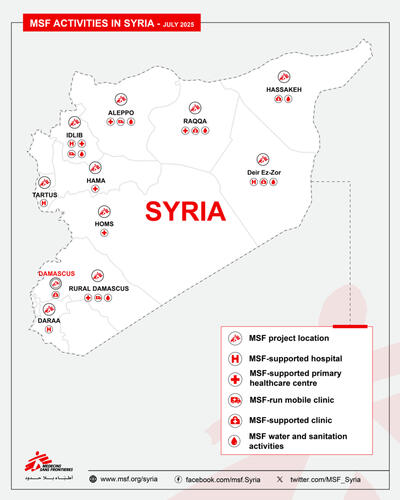
“In light of the huge health care needs in Syria, MSF expanded our activities to 11 out of 14 governorates,” says Brian Moller, MSF head of mission in Syria. “The primary goal of our operations is to respond to the people’s medical and humanitarian needs, bringing care closer to communities who may not have access to it.”
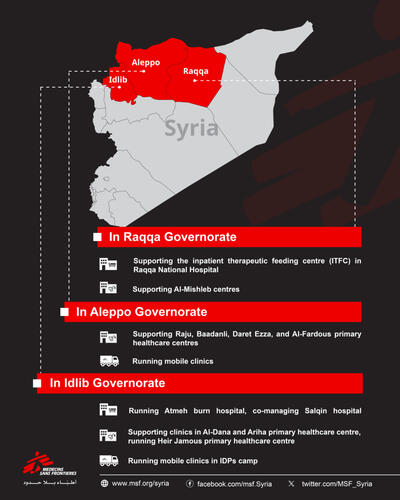
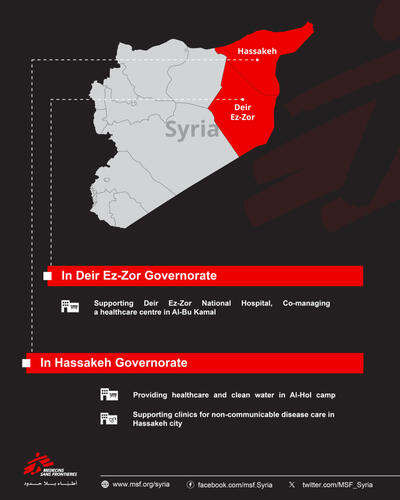
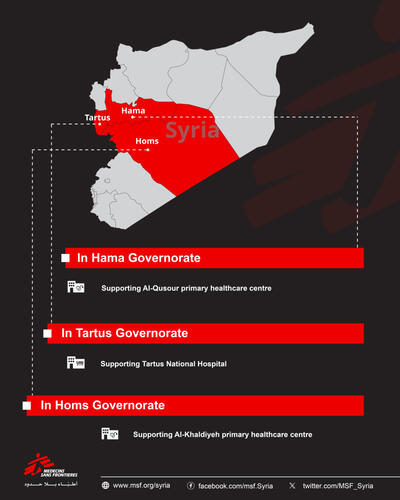
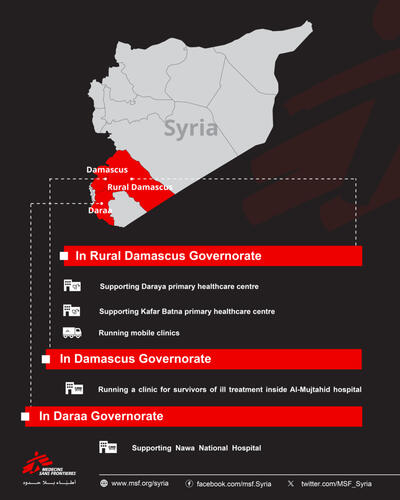
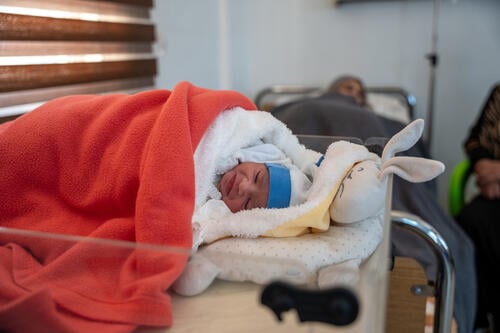
MSF is running a hospital for specialised burn treatment and co-managing a hospital with the Directorate of Health in Idlib, in addition to supporting four other hospitals with activities such as emergency care in Deir Ez-Zor, providing malnutrition treatment in Raqqa, maternity care in Daraa, and providing mass casualty trainings and training for staff members in other facilities across the country. We are also supporting the burn departments of five hospitals in Syria, assisting the Ministry of Health in developing a network of burn treatment units.
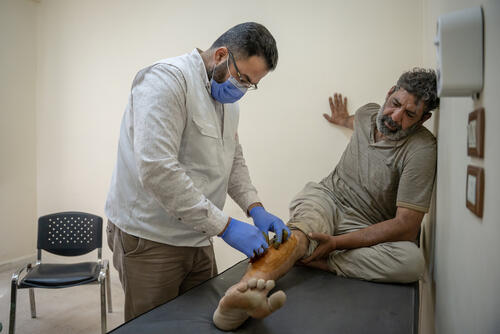
MSF is also working in 15 health facilities, including general health centres and clinics, across the country. Among the activities run or supported by MSF are outpatient consultations, care for non-communicable diseases, sexual and reproductive health services, and mental health support. In addition, we run mobile clinics to help ensure access to care in underserved communities of Aleppo, Idlib, and rural Damascus.
Dire living conditions continue to put people at risk of infectious diseases such as skin infections, and waterborne diseases such as acute and chronic watery diarrhoea.Caroline Chestnutt, MSF water and sanitation activity manager in Syria
Returning to rubble and remnants of war
As of July 2025, it is estimated that more than 1.5 million internally displaced Syrians have returned to their areas of origin since late November 2024, 3 and more than 641,000 Syrian refugees have crossed back into Syria from neighbouring countries since early December 2024. 4
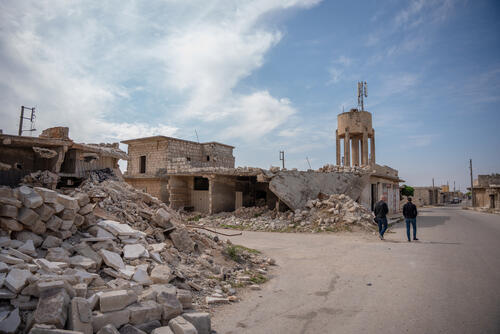
But they are not necessarily returning home. People have come back to vast destruction that has severely affected civilian infrastructure, including power grids and water sources. With heavily damaged housing, people are living in shells of houses and completely unsafe buildings, putting them at risk of traumatic injuries.
In addition, returnees face the life-threatening risk of unexploded ordnance and landmines, which are scattered throughout homes and farmlands, hampering their ability to rebuild their lives.
Lack of access to water and sanitation threatens health
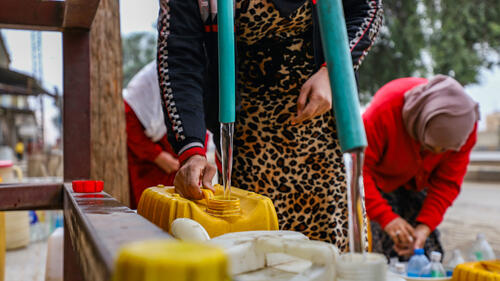
Access to clean water in areas of return, as well as in displacement camps and settlements, is a huge challenge, compounded by the lack of electricity, destroyed infrastructure, and drought. As a result, people rely on water distributed by trucks which carries a risk of contamination. Sewage and waste management systems are partially functioning at best, or completely destroyed in some areas.
“MSF is worried about the health implications of the poor water and sanitation conditions we’re witnessing in areas of return and displacement camps,” says Caroline Chestnutt, MSF water and sanitation activity manager in Syria. “Dire living conditions continue to put people at risk of infectious diseases such as skin infections, and waterborne diseases such as acute and chronic watery diarrhoea.”
MSF is working to increase the availability of safe water in areas of return and displacement camps across Syria, with teams rehabilitating boreholes and supplying clean water to residents.
“The work of our Syrian colleagues has been crucial in maintaining our activities throughout the conflict,” says Moller. “MSF remains firmly committed to advocating for the most pressing needs and systematic gaps hindering access to essential medical care.”
-
UNHCR, 3 July 2025
Syria
Addressing people’s medical needs in Dara’a after years of conflict
Project Update
24 Dec 2025