- Drone strikes by the Sudanese Armed Forces, Rapid Support Forces and allied groups are hitting civilian areas along the Chad-Sudan border.
- On the Chad side of the border, MSF had to transfer activities to a new hospital after bullets and shelling reached areas near Mabrouka hospital in Tine.
- Civilians, including displaced families, need immediate protection and critical support.
Tine, Chad — Drone strikes carried out by Sudanese Armed Forces (SAF), Rapid Support Forces (RSF) and allied groups continue to hit civilian areas along the Sudanese border with Chad. Since early February 2026, 457 people injured in attacks have been treated by Médecins Sans Frontières (MSF) in collaboration with Chad’s Ministry of Health staff in the border city of Tine. Amid insecurity and lack of sufficient resources to provide medical support, we are warning about the dire impact on people caught in the crossfire.
At the end of February, the RSF claimed the capture of the Sudanese city of Tina, in North Darfur state, right next to Tine, eastern Chad. Heavy attacks, which continue to this day, have resulted in significant consequences for civilians, exacerbating an already dire humanitarian crisis. Civilians from Darfur region have experienced extreme levels of violence, including ethnic targeting of non-Arab communities, bombardment, and large-scale executions. In Tine, MSF provides medical and humanitarian support to people fleeing violence.
“We have been working around the clock. Our team has supported Chad’s health authorities in treating 457 people in two months,” says Rita Magano, medical project coordinator in Tine who was part of the MSF team responding to 13 mass casualty incidents. “Civilians were not spared from violence, with six children among the wounded.”
We did not expect such a large influx of seriously wounded patients. We did our best to stabilise them, dress wounds and perform lifesaving surgeries.Rita Magano, MSF's medical project coordinator in Tine
“Around 50 per cent of the injuries were on the upper and lower limbs, with a significant proportion of open fractures. We did not expect such a large influx of seriously wounded patients,” she says. “We did our best to stabilise them, dress wounds and perform lifesaving surgeries.”
MSF teams have worked in two hospitals to care for injured people. Of the 457 people we saw at both facilities, 38 died, with 19 in a single day on 16 March following attacks at the border.
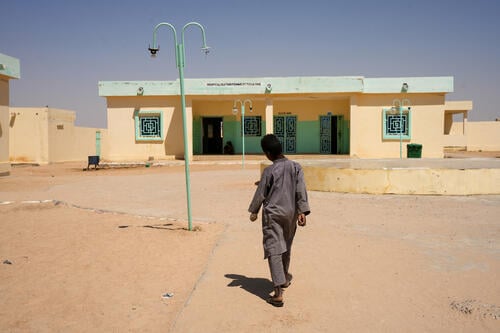
We were initially supporting Mabrouka hospital in Tine, located a few hundred metres from the border.
“On 21 February, we closed and transferred people and the equipment to the new health facility within a few hours because there were bullets and shelling near the hospital and we couldn’t guarantee security,” says Jean Hippolyte, MSF logistics manager and one of the 11 MSF staff supporting the newly built hospital in Tine. “One day we received 123 patients at once and were running out of medications that are critical in surgeries. Access to water and electricity was also disrupted in the new hospital, making the emergency response very challenging.”
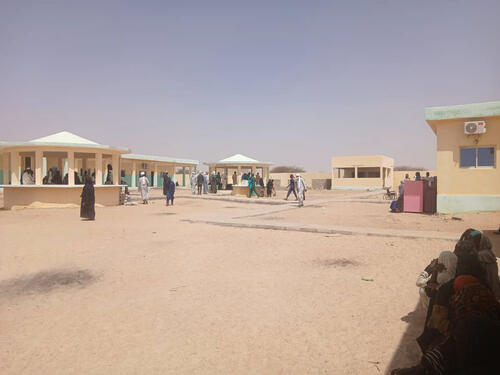
On 18 March, a drone attack killed 17 people who were attending a funeral in Tine, according to the Chadian authorities. MSF teams treated 24 people, with many in critical condition. Attacks in Chad place both humanitarian workers and civilians, including refugees who fled the war in Sudan, at risk.
“We keep adapting and relocating our activities. Our team went into hibernation on a few occasions for security reasons,” says Hippolyte. “The current insecurity makes it unsustainable for MSF to provide even a minimum of medical support to people seeking protection in Chad.”
MSF also works in a transit camp in Tine to support refugees who fled the war in Sudan. Despite the security challenges, the team continues to provide outpatient consultations, malnutrition screening, vaccinations, and support to victims and survivors of sexual violence, as well as mobile clinics. MSF is the only organisation providing water after others left due to lack of resources. In addition, Tine is currently experiencing a measles outbreak – as are other districts in Chad – which led us to vaccinate 710 children on 25 and 26 March.
Civilians at the Chad-Sudan border need immediate protection. Given the continued deterioration of the situation in North Darfur, global humanitarian funding cuts, and the extreme levels of violence and deprivation experienced by displaced families, people need critical support for their massive humanitarian needs.
Conflict in Sudan
Sudan: MSF treats around 170 people for drone injuries in two weeks after strikes hit civilian areas
Press Release
19 Feb 2026
Lebanon
Lebanon: Humanitarian scale-up urgently needed after almost two months of devastation
Statement
17 Apr 2026