In late 2024, many families in Syria began returning to their hometowns. These were places they had not seen for years during the war. For many, the journey back to towns like Daraya, in rural Damascus, followed years of displacement, when people moved between temporary shelters, overcrowded towns, and informal settlements in search of safety. Returning was rarely a simple decision, but one driven by exhaustion, limited options, and the hope of rebuilding their lives.
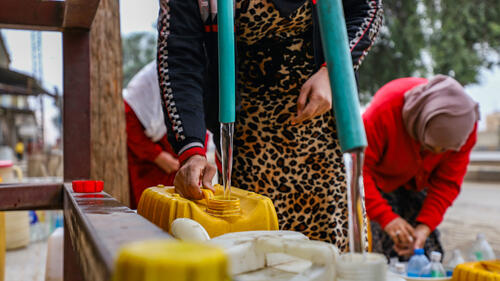
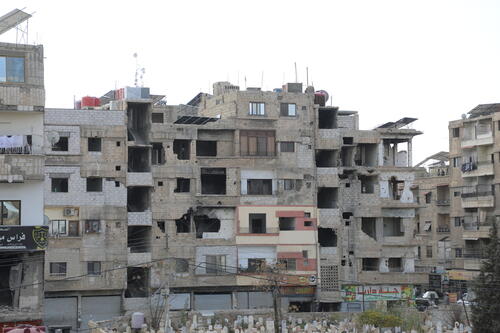
People who returned to Daraya found a town that barely resembled the place they once knew. Entire neighbourhoods were reduced to rubble, homes stood open to the sky, walls were blackened by fire, and belongings were long gone. Streets that once bustled with life were now silent, and essential services, like electricity and water systems, no longer worked.
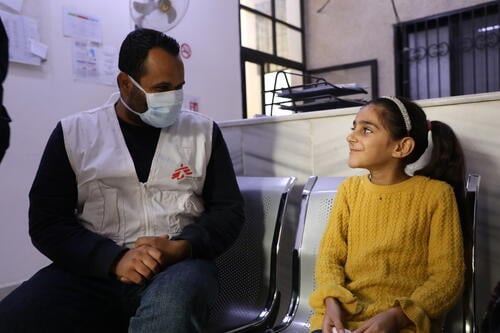
“We came back because there was nowhere else to go,” says Emad, a father waiting for his child’s appointment at Daraya healthcare centre. “But starting over like this is harder than we imagined.”
For families trying to start again, the lack of healthcare was especially alarming. Years of damage and neglect had left medical facilities unusable. After enduring prolonged displacement and interrupted treatment, returning to a town without functioning health services meant facing new risks at a time when resources were already stretched thin.
A return marked by urgent needs
As Daraya once again became reachable, Médecins Sans Frontières (MSF) assessed the needs of returning families. Access to healthcare emerged as a critical priority. Many had gone years without reliable medical care, managing illnesses, pregnancies, and emergencies on their own or travelling long distances for help.
Over eight months, MSF worked closely with the Directorate of Health to restore essential health services in Daraya. The Daraya healthcare centre was rehabilitated, and a fully equipped emergency room was established. MSF provided medical supplies, diagnostic equipment, and staffing, enabling the delivery of comprehensive general healthcare services.
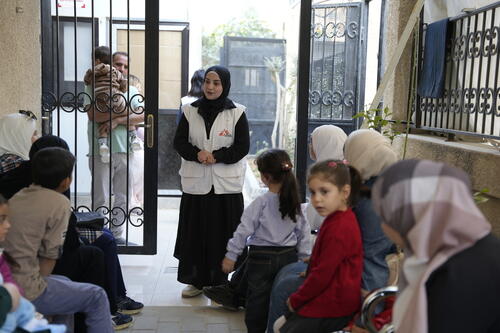
Daraya’s residents now had something they had not seen in a long time: a place close to home where parents could bring a sick child, where someone living with a chronic illness could receive regular care, or where an injured person could receive emergency care. MSF worked to restore this facility between February and December 2025, with donations of supplies continuing into early 2026 to assist the Directorate of Health with continuity of care.
Restoring healthcare in Daraya
Our efforts in Daraya extended beyond treating illness. The team worked closely with the Directorate of Health to restore services and address health needs which were often neglected during the conflict, particularly for women and girls.
Sexual and reproductive health care services were strengthened to provide family planning services, care during and after pregnancy, and support for victims and survivors of gender-based violence.
“Our goal was to make sure women and girls could access care safely and with dignity, even after years of disruption,” says Ghetnet Elias, MSF’s project coordinator at the Daraya healthcare centre.
For women like Moneera, the restored services brought relief. “I can finally come here for my check-ups and know my children will be cared for too,” she says.
I can finally come here for my check-ups and know my children will be cared for tooMoneera, community member in Daraya
In a context shaped by loss and poverty, these services helped recognise people’s dignity, and restore their sense of safety and choice.
Mental health care was also a key component of MSF’s work in Daraya. Years of violence, displacement, and uncertainty had left many residents with psychological wounds. The healthcare centre offers counselling and psychosocial support, providing a safe space for individuals and families to share their experiences, find ways to cope with stress and loss, and begin healing.
“In Daraya, mental health care is more than just treatment, it's about offering a lifeline to those who have lost so much,” says Marion Robinson, mental health activity manager. “My role is to guide my team towards helping people not only heal, but to find a way back to themselves and their communities, rebuilding hope where it once seemed lost.”
For patients with conditions requiring advanced treatment, our team collaborated with the Directorate of Health to establish referral pathways to hospitals in Damascus. This ensured timely access to specialised care while strengthening local healthcare systems and protocols.
Building safer, trustworthy care together
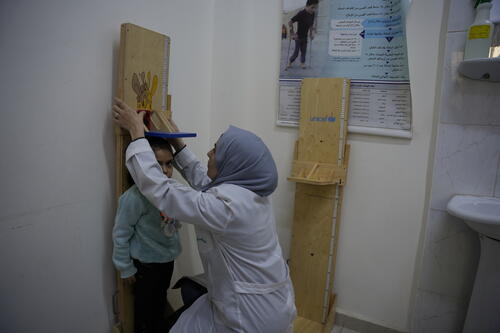
Restoring healthcare in Daraya healthcare centre was not just about reopening facilities but about rebuilding trust. MSF worked alongside the Directorate of Health to strengthen infection prevention and control measures, improve water and sanitation systems, and reinforce patient safety standards. Local health staff received hands-on training and ongoing support, helping to rebuild confidence in services that have been absent or unreliable for years.
Community outreach also played a key role. As services stabilised, more patients began visiting the centre, not only for emergencies but for routine check-ups, follow-ups, and preventive care. This renewed trust reflects the effort shared between MSF and the Directorate of Health to enact our commitment to providing respectful and reliable care. While MSF worked at the centre, the clinics provided care to more than 30,000 patients.
A collaborative model and a smooth transition
From the outset, MSF’s work in Daraya was designed in close coordination with the Directorate of Health, with a clear focus on strengthening local capacity and ensuring sustainability. By the end of the eight-month response, the healthcare centre and emergency room were fully operational, and had established referral pathways and improved safety protocols, all supported by trained staff.
As other health providers resumed their activities in Daraya, MSF prepared a gradual transition of responsibilities, including training, mentoring, and technical guidance, to ensure the continuity of services. The collaboration demonstrated how humanitarian organisations and local health authorities can work together to bridge recovery phases and lay the groundwork for locally-led care.
Syria
After years of detention former Al Hol residents face uncertain future
Press Release
27 Feb 2026
Syria
Addressing people’s medical needs in Dara’a after years of conflict
Project Update
24 Dec 2025